Monday, 9 November 2020

ICY ROADS TO ARIZONA

This year we left late October to avoid any difficult road conditions.  Things went well until we got to Texas when we noticed oncoming traffic was at a crawl, then at a stop.


Then we saw that northbound trucks had crossed the median striking several southbound rigs.

Stay in Your Lane

Oh no! Not FedEx!


Surrounded by Northbound Truckers

When we finally arrived at our campground for the evening, we saw this old RV buried in the dirt.
We Put on a Happy Face!


Wednesday, 25 December 2019

CRAWFISH CAPITAL OF THE WORLD

Small harvests of farmed crawfish for human consumption occur in states such as Texas, Arkansas, Mississippi, Alabama and the Carolinas. But Louisiana is by far the largest producer of crawfish in the United States

Crawfish Breathe Thru Feather-Like Gills
Crayfish, also known as crawfish, crawdads, crawlfish, crawldads, freshwater lobsters, mountain lobsters, mudbugs or yabbies, are freshwater crustaceans resembling small lobsters.


Crawfish Trap


Red Crawfish Traps in Rice Field
Crawfish ponds have no standard size, but most are between 10 and 40 acres, and most producers manage 150 or fewer acres.
Some farmers use the crawfish ponds for growing rice at other times of the year.


Sunday, 9 December 2018

RICE IN LOUISIANA

When we first came to the Acadiana area of Louisiana we were surprised to see rice paddies.  But we learned that Louisiana is the third largest producer of rice in the U. S., behind Arkansas and California. 

Added to Nat'l Register of Historical Places
The Conrad Rice Mill is an independently owned and operated rice mill located in New Iberia, Louisiana. Established in 1912, it is the oldest independently owned rice mill in the United States still in operation. You don't really think about how rice makes it from the field to your table, but this facility does a nice job at showing the entire process.

Formerly Conrad Rice Company
The name is an acronym: “Kon” is the “Con” in Conrad, “Ri” stands for rice and “Ko” is company.  It produces the Konriko brand of rice varieties.


In the country store, we watched a 20-minute video on Cajun culture and the beginnings of rice and the rice industry. We walked next store to the actual mill where the basic objective of a rice milling system is to remove the husk and the bran layers, and produce an edible, white rice kernel.

Designated in 1981
The old mill has been in operation since 1912 and is still growing strong today. The guide told us all the equipment still worked. A historic place must have historic context, must be original and must not be updated. We found it interesting that if a part breaks, a new one must be made or the mill could lose its historical status. 
The "Cupboard" Illustrates Milling Process
The tour guide had a model of the mill which showed how the rice looked after each stage of the process; cleaning, hulling, milling, polishing, grading, sorting, packing and storing. 
Rice Conveyor
It feels as though the mill is frozen in time because of its vintage appearance. The 105 year old cypress floors are covered in what looks like fine sand. But the dust is actually dust from rice hulls, the bran taken off the rice.  
Antique Equipment
It's a real historic working rice mill, complete with historic equipment, historic wooden beams and historic rust. Gravity does much of the work.


Note the Lanterns
This rice mill was built by P.A Conrad, an astute business man.  The building design was ingenious and most of the equipment used to process rice is the same today that has been used for over 100 years. This is not a fancy factory, but it is very unique, over 100 years old, and still producing quality products. 


F
Bagger Accommodated Different Farm Crops 


I bought a two pound bag of wild pecan rice that tastes pecan-like when cooked. There are no pecans in the rice, they just call it that. It has to do with the milling process. LSU worked with growers to develop this hybrid rice, although it can't be classified as organic. I was cautioned to either freeze or refrigerate this rice.


Monday, 3 December 2018

VANDERHOOF, BC

August 11, 2011

Today is our last travel day with Adventure Caravans.  We had a farewell dinner celebration at the Country Inn Restaurant in Vanderhoof, BC.

After dinner were were each asked to tell what you got out of your trip. 
Many of the comments triggered recollections about destinations and personal experiences that would seal our memories of this trip of a lifetime.

The Wagon Masters and Tail Gunners offered their observations about this group of caravaners.  Everyone got along, no whiners, and all punctual.

A campfire finished out the day giving us one last chance to hang out together as tomorrow we all set out for different destinations.

RV Resorts 2015-2016

Fort Lauderdale,FL (Markham County Park)

At the Gateway to Florida Keys


Marathon, FL (Grassy Key)

Close Enough to Key West for a Day Trip

Chokoloskee, FL

Western Everglades

Ft Myers
3 Yrs Old Beautiful RV Resort, Drainage Issues


Sarasota, FL
Sarasota Sunny South (Capt Billy)
Free Saturday Breakfast & Wednesday Dinner


Grand Oaks in Lady Lake, FL

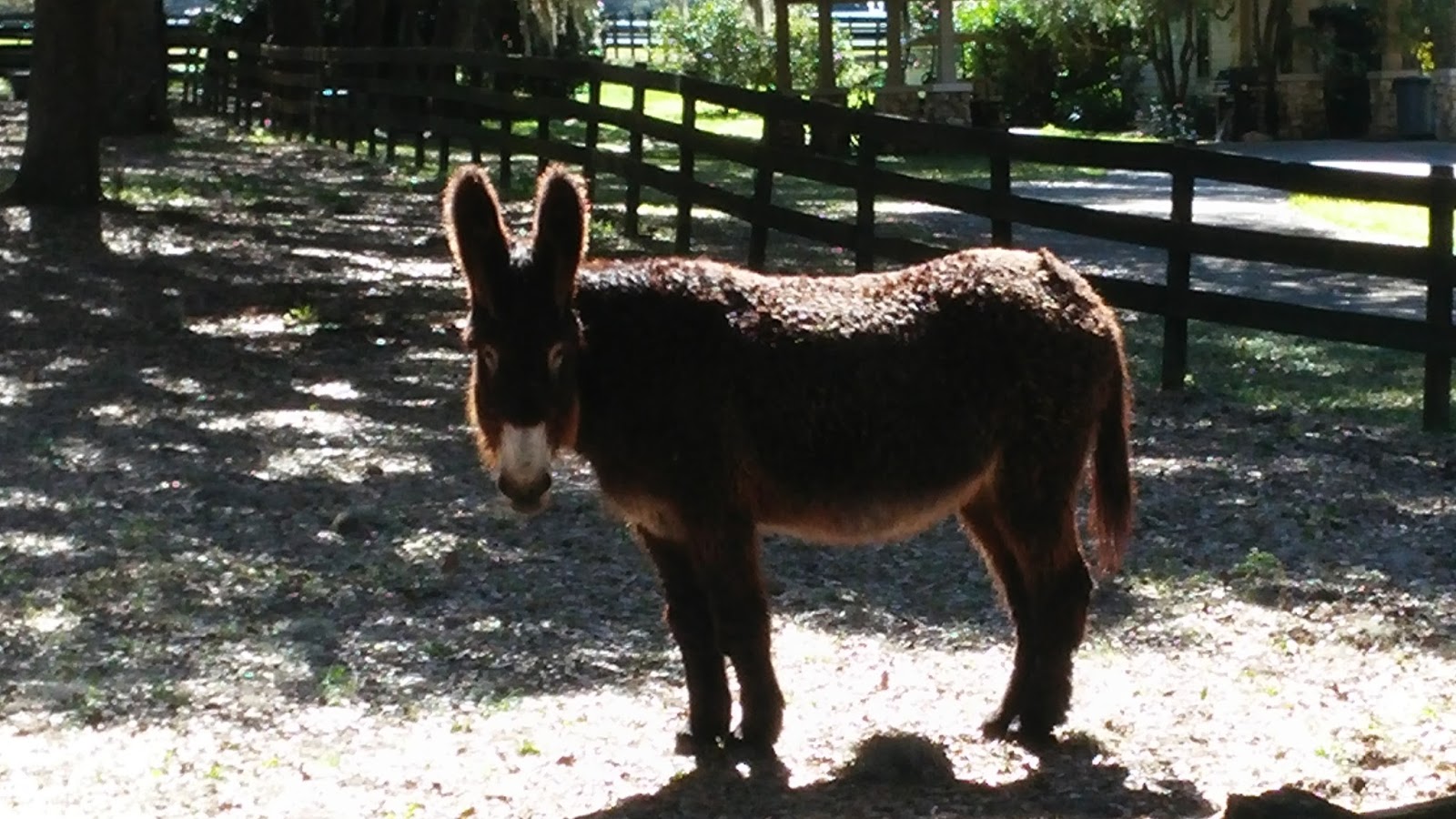
Nicolette, Rare Donkey
Beautiful Grounds

400 Acre Equestrian Resort


Bella Terra - Foley, AL

Ahhhhhhhhhhhhhhhhhhh


MAKING LIFE SWEETER NATURALLY

Sugarcane Field
Jesuit priests first brought sugarcane to Louisiana in 1751 from New Guinea.  to Louisiana in 1751.  Sugarcane cultivation is successful on the alluvial spills in South-Central Louisiana, known as the "Sugar Bowl."  Louisiana's temperate climate allows this tropical crop to flourish.  It takes one full year to mature. The plant is six to 20 feet tall.
Burning Sugarcane Fields
Farmers burn sugarcane to reduce the any leafy material, including stalk tops, delivered with the cane to the factories for processing.


Harvesting Sugarcane
The sugarcane is harvested in early October around Acadamia. When cane is one year old, a chopper/harvester machine pulled by a combine tractor cuts the 8-foot tall cane and it spits it out into a side wagon as 6-8” pieces. When it’s filled, the wagon is brought to the sugar mill, within 12-24 hours, before it starts souring.


Trucks Haul Sugarcane to Mills
Once at the mill, the cane is cut into small pieces with a large cutter making it easier to squeeze the cane juice. The sliced cane pass through a series of 5 large roller mills, squeezing more and more juice out each time. This dirty juice is then boiled at high temperatures, crystallized through a spinning process using a large centrifuge and then left out to dry as a brown sugar. The sugar is stored in massive warehouses waiting distribution and refining.

Friday, 30 November 2018

JURASSIC PARK IN LOUISIANA

Dinosaurs Galore!
This prehistoric park is close to Cajun Palms RV Resort.  We could hear dinosaur noises coming from this walk-thru park. We expected a Disney like experience where the creatures were animated and bellered like in the movies but alas none of the dinosaurs along the walkway moved or made noise.  Nonetheless, it was a nice day to go for a walk along the shaded paved path in a dinosaur park.

Pterosaur - "Winged Lizard"
The Pterosaur was a flying reptile and a carnivore.  They ranged from a few inches up to 40 feet long. They walked on their elbows, by folding in their wings. They had a large brain and excellent eyesight.

Velociraptor - "Swift Plunderer"
 The Velociraptor was about the size of a really large turkey, and believed to have had feathers. They travelled in packs.  They ran with their sickle-shaped toes pointed back, ready to tear apart any prey they go hold of. Their tails were inflexible and not useful as weapons, but it kept them balanced as they ran, hunted and jumped.  They may have been able to run up to 40 mph on their skinny legs, but only in short bursts.

Camarasaurus - "Chambered Lizard"
The Camarasaurus was up to 85 feet in length, up to 15 tall and up to 20 tons. It had a larger, hollow-like head in comparison to other sauropods. It had a relatively short neck and tail. It was a herbivore with teeth strong and robust indicating it may have processed food in its mouth a while before swallowing.

Tyrannosaurus Rex - "Tyrant Lizard King"
The T-Rex, a carnivore,  was up to 42 feet in length, up to 13 feet tall and up to seven tons. It has massive jaws with 50 to 60 blade-like teeth, some up to nine inches long! It could bite its prey with the force of 2000-3000 pounds of pressure. When it ran, it could go 20 mph and cover 15 feet in one step. Its arms were only three feet long with two-fingered hands, not too helpful in fighting other dinosaurs.

Styracosaurus - "Spiked Lizard"
The Styracosaurus was a herbivore that ate ferns and plants.  It was up to 17 feet long, up to six feet tall and up to three tons. Their large frills had at least six horns on them. It also had a two foot horn extending from its snout and smaller horns poking out from its cheeks. The horns were likely used to defend them from predators.

Olorotitan - "Giant Swan"
The Olorotitan was an herbivore that ate twigs and leaves. It was up to 40 feet in length, up to 13 feet tall and weighed up to five tons.  It had a relatively long neck compared to other duck billed dinosaurs. They walked primarily on two legs though it may have grazed on all four legs. It was the fastest of the hadrosaurs when on its hind legs.

Gastonia 
The Gastonia was a herbivore that ate plants,  It was up to 15 feet long, up to five feet tall and weighed up to one ton.  It had poor eyesight but a great sense of smell and hearing.  It moved slow and probably behaved like most turtles, lying low and waiting for predators to pass.  The only way to take this creature down would have been by flipping it on its back as it had a soft belly. Its head contained a mobile brain case, perhaps for shock absorbency in case of head butting in a confrontation. The Gastonia was recently discovered and named in 1998 after Rob Gaston who found the first specimen. Research is still being done on how rapidly they grew and how much they needed to eat.

In the Mouth of a Dinosaur


The highlight was the roomful of animated dinosaurs a the end of the tour and before entering the gift shop.  The tail of the dinosaur looked like it could knock the head off a really tall person.